How to Create a Montessori Self-Care Space for Kids (That Actually Gets Used)
One of my favorite parts of Montessori education is how much trust it places in young children. The idea that, with a well-prepared space and appropriate materials, children are capable of far more independence than we often expect. I have seen this time and time again since becoming a mom. And a Montessori self-care station is a beautiful example of this philosophy in action.
At its core, Montessori self-care stations are about honoring a child’s natural desire to participate in everyday life. Not as pretend play—but as meaningful, real work. These stations support self-care tasks, daily routines, and essential practical life skills while nurturing confidence, responsibility, and self-motivated growth from an early age.
Let’s walk through how to create a child-friendly space that supports independence, reduces parental stress, and fits naturally into your home.
The Montessori Philosophy Behind Self-Care Stations
Maria Montessori placed great emphasis on the prepared environment. Montessori’s idea was simple but powerful: when a child’s environment is thoughtfully designed with easy access and child-appropriate tools, independence naturally follows.
A Montessori environment supports:
The child’s independence
Hands-on interaction
Respect for physical abilities while supporting motor skills naturally
Independent practice of specific skills
Rather than doing everything for children, we create spaces where they can do things for themselves. Over time, these small daily tasks build the foundation for self-sufficient adults.
Related Reads:
What Is a Montessori Self-Care Station?
A self-care station is a dedicated corner of the home—often in a child’s room, bathroom, or corner of the bedroom—designed to support hygiene routines, grooming, dressing, and other everyday tasks.
Think of it as a basic self-care station that includes:
Personal hygiene items
Self-care materials
Child-height furniture pieces
Fewer hazards and thoughtful safety standards
This isn’t about creating a Pinterest-perfect setup or adding extra cost. It’s just about functional benefits and supporting children’s growth through everyday life. No need to complicate it!
Essential Elements of a Montessori Self-Care Space
Sounds good? So, where do you even start? Here are a couple of ideas and a framework to keep in mind while creating this space for your kids
1. Child-Height Furniture & Easy Access
Low shelves and a small shelf are key. Children should be able to reach everything independently without asking for help.
Helpful furniture pieces might include:
A low table or vanity
A small stool or convertible kitchen tower
A child-height mirror or acrylic mirrors (safer than glass)
A piece of furniture that can evolve as your child grows
Easy access is a key benefit here—when materials are visible and reachable, children are far more likely to use them.
2. Mirrors: Seeing Themselves as Capable
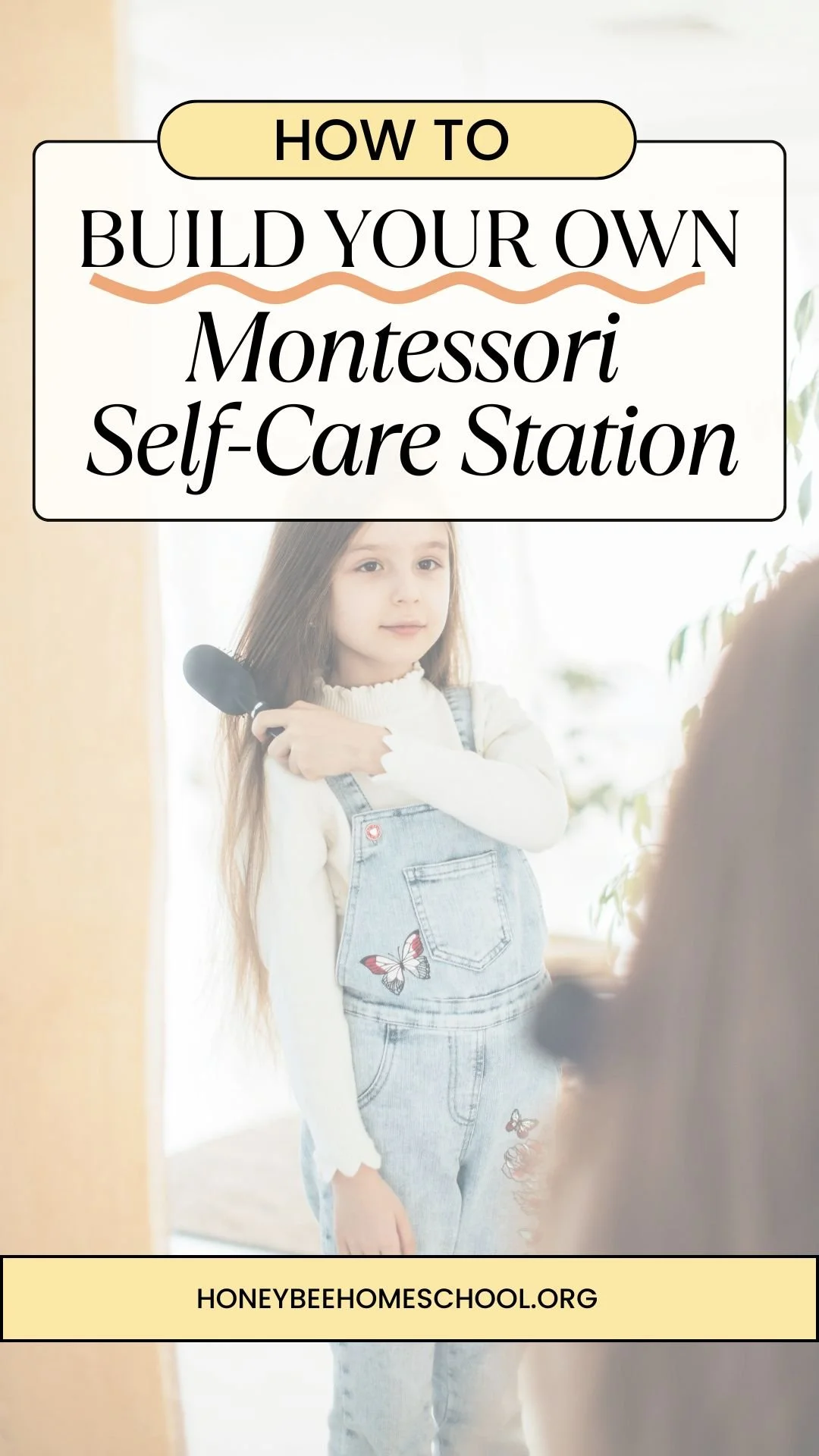
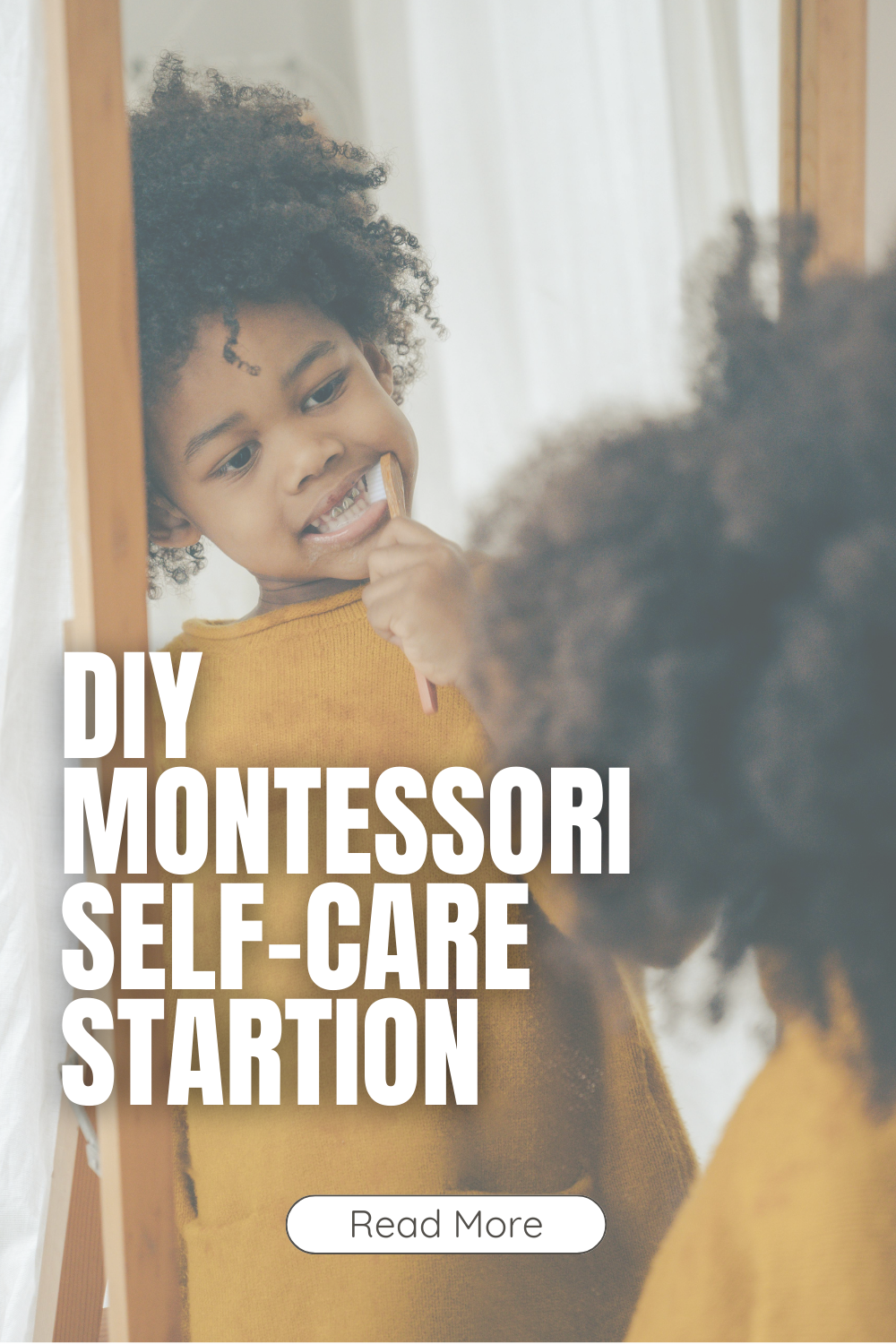
A child-height mirror is one of the most impactful additions. It allows little hands to practice:
Hair brushing
Washing faces
Tying shoelaces
Putting on jackets
Acrylic mirrors are a great option for young toddlers because they reduce safety risks while still supporting independence.
3. Personal Hygiene & Practical Life Skills
A Montessori self-care station supports essential practical life skills that children use every day.
Include items like:
A hair brush
Child-safe scissors
A child’s towel
Toothbrush and toothpaste
Straw cups, open cups, or glass cups (depending on age)
Near a bathroom sink, you can add a step stool to encourage hygiene routines like handwashing and tooth brushing—skills that support overall development and a growing sense of responsibility.
Montessori Self-Care Activities for Daily Routines
Montessori practical life activities are rooted in real, everyday tasks—not pretend versions. So they should be fairly simple to implement because they are already a part of your routine.
Examples of self-care activities include:
Getting dressed using a Montessori wardrobe
Practicing diaper changes with a doll
Pouring water into open cups
Preparing snacks
Folding washcloths or organizing small items
These daily tasks help children feel capable and connected to their environment.
Beyond Self-Care: Creating Purposeful Stations Throughout the Home
While this post focuses on self-care, many families expand into various Montessori stations that serve different purposes.
You might also include:
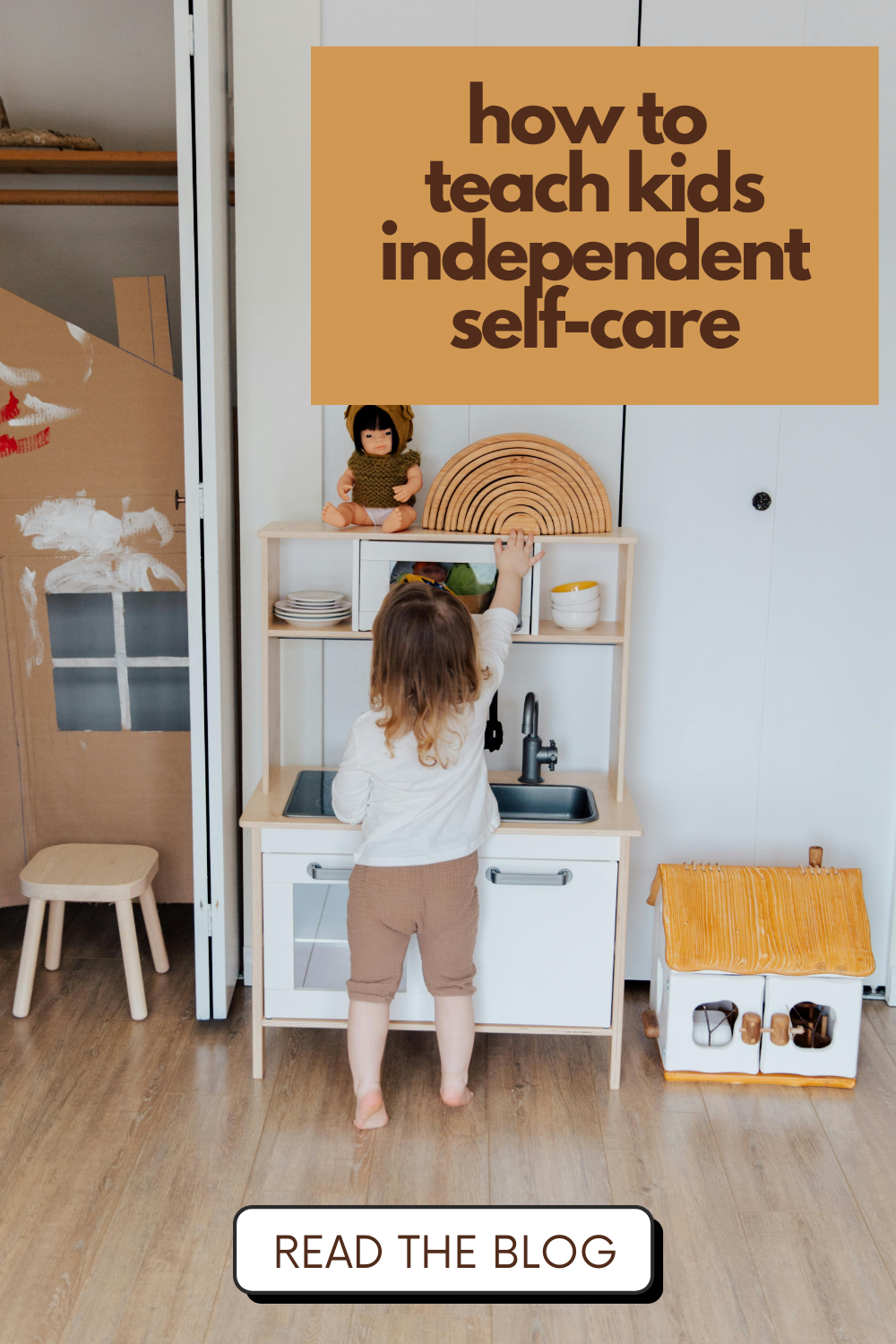
A Montessori play kitchen for food prep
A literacy station with a reading nook and low book display for kids to choose their own books for story time
A creative station with drawing pads, nature-based collages, and sensory play
A themed station that rotates with interests
These stations encourage imaginative exploration, open-ended creativity, and hands-on learning across the home.
Related Reads:
Safety First (Without Over-Restricting)
Obviously, safety standards matter—but Montessori encourages calculated risk, not fear.
Tips for minimizing safety risks:
Choose appropriate materials for your child’s age
Use fewer hazards instead of eliminating tools entirely
Supervise initially, then step back
Secure low shelves to the wall
Children learn responsibility by using real tools thoughtfully.
Supporting Independence Without Overwhelm
A well-prepared space doesn’t need extra materials everywhere. Start small.
One self care station with:
A small shelf
A mirror
A few self-care materials
…is often more effective than a cluttered setup. Too many options can overwhelm young children and reduce independent practice.
Montessori Self-Care Spaces Grow With Your Child
A Montessori self-care station isn’t static. It evolves as your child’s unique needs change.
For young toddlers, focus on:
Hygiene routines
Simple grooming
Basic self-care skills
For older children:
Tying shoelaces
Managing clothing
More complex practical life activity
The goal is always the same: supporting independence, confidence, and self-motivated growth.
Final Thoughts: Why Montessori Self-Care Spaces Matter
A Montessori self-care space may look simple—but its impact is profound.
By honoring a child’s natural desire to care for themselves, we:
Reduce parental stress
Support children’s growth
Build essential life skills
Lay the foundation for self-sufficient adults
And the best part? These skills transfer into everyday life far beyond childhood.
latest on the blog